


Africa continues to advance and demands investment at scale, justice in global systems, and partnerships grounded in respect, UN Secretary-General Antnio Guterres said on Tuesday.
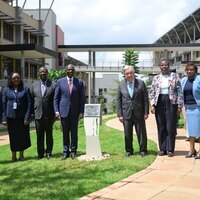
The United Nations on Monday launched a major expansion of its Nairobi headquarters, with Secretary-General Antnio Guterres and Kenyan President William Ruto marking what officials described as a significant milestone for the Organizations presence in Africa.
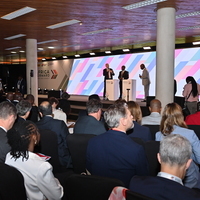
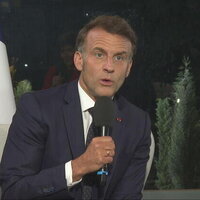
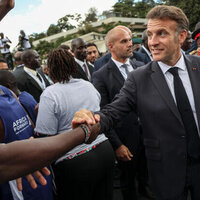
The UN chiefwas speakingattheopening of theAfrica Forward Summit,co-hostedin Nairobiby Kenyan President William Ruto and French President EmmanuelMacron.
The name of this Summit captures the moment and the mission,hesaid.Africa is not waiting.Africa is moving. Africa is leading.
Driving debate, finding solutions
Mr. Guterreshighlighted how Africaisdriving the debate around reforming global financial institutions that were designed in 1945 for a world that no longer exists.
He credited thecontinentsleading role in other areas,includinggettingthe Pact for the Futureapproved, buildingnew tools for debt negotiations, and challenging credit ratings systems.
African leadershipalsohelped to securethe Sevilla Commitmenton expanding lending by multilateral development banks,andalongside small island States,putthe climate emergency at thecentreof the global agenda,he added.
This is not a continent waiting for solutions.This is a continent producing them,he said.But let us be honest about what stands in Africas way.
Old injustices persist
The Secretary-General pointed to aglobal system designed without Africa and still largely operating without Africa, perpetuating century-old injustices.
Despite beinghome to more than1.5 billionpeople, Africa has no permanent seats on the UNSecurity Counciland limited decision-making power within the international financial institutions that shape its economy.
It is not Africa that loses. It is the world that loses by the fact that the voice of Africa is not convenientlytaken into account,he said.
Crisis of solidarity
Hewarned thatmeanwhile,officialdevelopmentassistance(ODA)isfallingand aid budgets are being cut when needs are at theirhighest,representingnot only a financing crisis but a crisis of solidarity.
Citingclimate change, heemphasisedthat although Africa did not cause it,the continent is bearing the harshest consequences such as displaced communities, foodinsecurityand economic shocks.
Africa must be at thecentreof climate justice,the Secretary-Generalsaid, noting that even though the continent holds 60 per cent of the worlds best solar potential, it receives only two per cent of overall clean energy investment
With the right finance, Africa could generate ten times more electricity thanitneeds by 2040 entirely from renewables.Yet,600million Africans live without electricity.
Furthermore, abillionpeopletherestill rely on unclean cookingfuels, responsible for some800,000deaths annually,mostly women and children.
No more exploitation
Africa also holds vast reserves of the critical minerals needed for the global transition to green energy, but for too long its resources have been extracted, thevalue captured elsewhere, the environmental damage left behind, he said.
In this regard,the UNPanel on Critical Energy Transition Mineralspoints the way, promoting fair value chains, in-country processing and manufacturing, and other actions thatbenefitcommunities.
No more exploitation. No more plundering,hesaid.The people of Africa must benefit, first and most, from the resources of Africa.
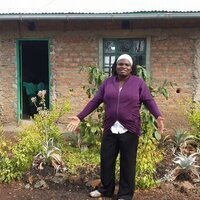
Afyafrica
Youth participate in an Afyafrica Kenya FGM (female genital mutilation) eradication campaign event.
Partnershipand investment
The Secretary-General alsostressedthe need for international partnership with Africa that is built on equality, complementarity, and mutual benefit.
He called for co-investment in industry, strengthening universities and research institutions, and building capacity in artificial intelligence (AI), thus shaping the technology by usingdata, languages,researchersandsystems all African-owned.
The power of youth
The UN chief also focused on Africas burgeoning youth population.
The largest transformation of this century is not a market it is a generation,he said, as by mid-century onein four peopleworldwidewill be African.
The success of this continent is not Africas interest alone it is theworlds, the Secretary-Generalsaid, concluding his remarks.
Together, let us move Africa Forward with confidence in its people, solidarity with its journey, and hope for our common future.